
Naprotechnology
Naprotechnology (also NaProTechnology®, referring to the medical theories and values presented in "The Medical & Surgical Practice of NaProTECHNOLOGY” by Thomas W. Hilgers, published by the Pope Paul VI Institute Press, Omaha, Nebraska, 2004) is a term describing natural procreative technology. It encompasses medical methods and therapeutic approaches designed to support and restore the natural mechanisms of fertility in accordance with the individual physiology of a woman’s menstrual cycle.
- Recognizing the individual pattern of a woman’s cycle allows for an assessment of its regularity, a better understanding of the underlying causes of fertility-related problems, and the selection of effective, targeted treatment.
- Decades of research on the female menstrual cycle have made it possible to identify the characteristics of normal cycles as well as the symptoms of disorders and pathological conditions.
- Systematic observation of cervical mucus characteristics and their changes throughout the cycle, recorded on the Creighton Model FertilityCare™ System observation chart, provides a highly valuable diagnostic tool for couples experiencing difficulties with conception.
- Infertility treatments used in NaProTechnology are tailored to the specific issues identified in a given couple. These may include vitamin and mineral supplementation, dietary modifications, medications to improve semen parameters or cervical mucus quality, hormone therapy synchronized with the individual menstrual cycle, laser therapy, and so-called near-contact surgery.
- NaProTechnology can also be used as a natural and ethical approach to family planning for couples who wish to avoid pregnancy by identifying fertile and infertile phases of the cycle.
 Physiology of fertility
 Maturation of woman
 Avoiding conception
 Pregnancy planning
 Fertility after childbirth
 Fertility problems
 Premenopause and menopause
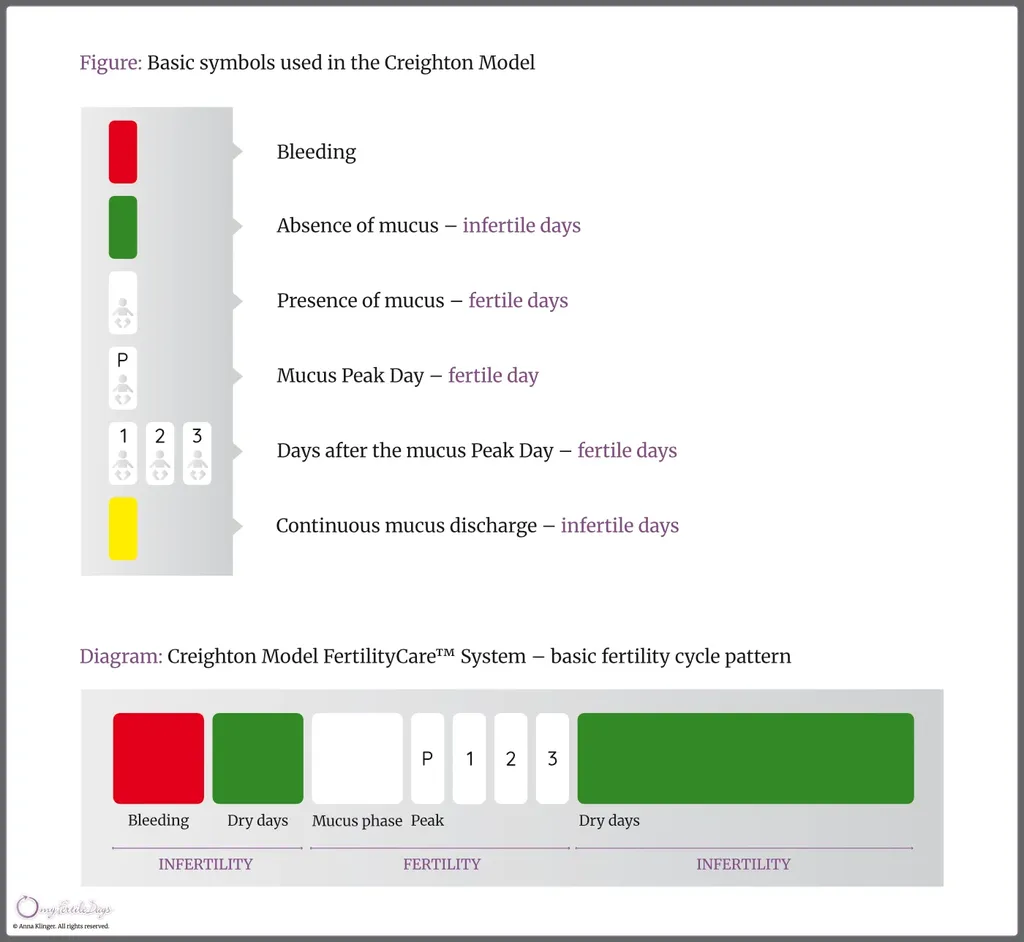
NaProTechnology is rooted in the Billings Ovulation Method and is based on detailed, systematic observation of cervical mucus and the sensations experienced in the vaginal vestibule. It classifies cervical mucus symptoms according to their fertility characteristics and standardizes their recording using the Vaginal Discharge Recording System (VDRS). NaProTechnology draws on decades of menstrual cycle and fertility observations, which have made it possible to collect extensive data on normal, regularly functioning cycles and to identify atypical patterns as well as pathological conditions. This evidence-based approach allows clinicians to determine the underlying causes of fertility problems, diagnose health disorders, and implement effective, targeted treatments. The Creighton Model FertilityCare™ System, used for daily cycle observations, is based on the assessment of mucus produced in the cervical crypts (glands) and observed externally on the vulva. These standardized observations provide precise and reliable information about a woman’s reproductive health and fertility status.
The cycle observation chart was introduced primarily as a diagnostic tool to help identify the underlying causes of fertility problems in married couples. It enables detailed assessment of fertility biomarkers, including in particular: the type, quantity, and quality of cervical mucus; the dynamics of cyclical changes; the length and course of the preovulatory phase; the length and stability of the postovulatory (luteal) phase; overall cycle length; the presence of intermenstrual spotting; and prolonged brown spotting following menstruation.
NaProTechnology addresses the following conditions and concerns:
- Infertility of various etiologies (according to Prof. Hilgers, infertility can be diagnosed after six months of systematic observation combined with regular intercourse; treatment effectiveness ranges from 50–80%);
- Prevention of unintended pregnancy;
- Endometriosis;
- Pelvic and fallopian tube adhesions;
- Recurrent miscarriage (with successful continuation of pregnancy and live birth in approximately 79% of cases previously considered at high risk);
- Preterm birth;
- Polycystic ovary syndrome (PCOS);
- Premenstrual syndrome (PMS);
- Postpartum depression;
- Irregular uterine bleeding;
- Low progesterone levels;
- Uterine fibroids and other benign tumors of the reproductive organs;
- Symptoms of the premenopausal period (with alleviation of symptoms reported in up to 95% of cases);
- Reduction or elimination of migraine headaches (with approximately 50% effectiveness).
Anomalies and irregularities that can be identified based on the Creighton Model chart:
- A short cervical mucus phase or the presence of poor-quality mucus can contribute to fertility difficulties. In completely dry cycles, levels of estradiol (17β-estradiol) and progesterone are usually low. This pattern is characteristic of an impaired follicular phase, involving inadequate follicle growth and maturation, and it often leads to abnormalities in the luteal phase, affecting the development and function of the corpus luteum.
- A short cervical mucus phase combined with a prolonged luteal phase (post-peak phase lasting longer than 16 days) may suggest a luteinized unruptured follicle (LUF) – an ovulatory defect in which the follicle does not rupture. This condition is associated with reduced levels of estrogens and progesterone.
- A short postovulatory (post-peak) phase indicates corpus luteum insufficiency and inadequate progesterone production, which may impair the ability to sustain a pregnancy.
- The presence of brown or dark spotting during the postovulatory phase or just before menstruation typically reflects suboptimal progesterone levels. Insufficient hormonal support of the endometrium can interfere with embryo implantation and may lead to recurrent miscarriage.
- Absence of a mucus phase may indicate anovulation and, when combined with infrequent menstruation, may be suggestive of polycystic ovary syndrome (PCOS).
- Abnormal bleeding patterns, including prolonged light bleeding or spotting, may indicate serious underlying disorders and require prompt medical evaluation.
- Variations in the length of the postovulatory phase exceeding four days may, according to Prof. Hilgers, indicate a future predisposition to breast disease.
- Severe menstrual pain is frequently associated with endometriosis.
- Premenstrual syndrome (PMS) symptoms occurring before menstruation are often linked to progesterone deficiency; a similar mechanism may contribute to postpartum depression.
The primary goal of NaProTechnology is to teach patients how to accurately observe and understand their natural fertility rhythm. Detailed cycle observations conducted over a minimum period of three to four months allow clinicians to identify abnormalities that may contribute to difficulties in conceiving.
The next stage involves systematic analysis of physiological and biochemical parameters over several months. These data help determine the presence of hormonal or anatomical disorders. If left undiagnosed and untreated, such anomalies may lead not only to infertility but also to broader health consequences, including pathological changes within the reproductive system, osteoporosis, hypertension, or cerebrovascular disease.
NaProTechnology physicians emphasize the use of modern diagnostic and therapeutic tools, including ultrasound imaging, hormonal assays precisely timed to the individual woman’s cycle, pharmacological treatment, and surgical interventions that preserve reproductive function (so-called near-contact surgery). Depending on the underlying diagnosis and cause of infertility, NaProTechnology may employ various therapeutic strategies, such as targeted vitamin and mineral supplementation and individualized dietary plans, pharmacotherapy to improve cervical mucus quality or semen parameters, laser treatment of endometriosis, pharmacological induction of ovulation, assessment and restoration of fallopian tube patency, and surgical correction of uterine or tubal anatomical abnormalities.
Based on:
- „The Naprotechnology Revolution”, dr med. Thomas W. Hilgers, Beaufort Books, New York 2010r.
- „The Medical & Surgical Practice of NaProTECHNOLOGY”, dr med. Thomas W. Hilgers, Pope Paul VI Institute Press, Omaha, Nebraska, 2004r.
- „Naprotechnologia – technologia naturalnej prokreacji”, Aleksandra Barczak, „Życie i płodność”, 1/2008r.